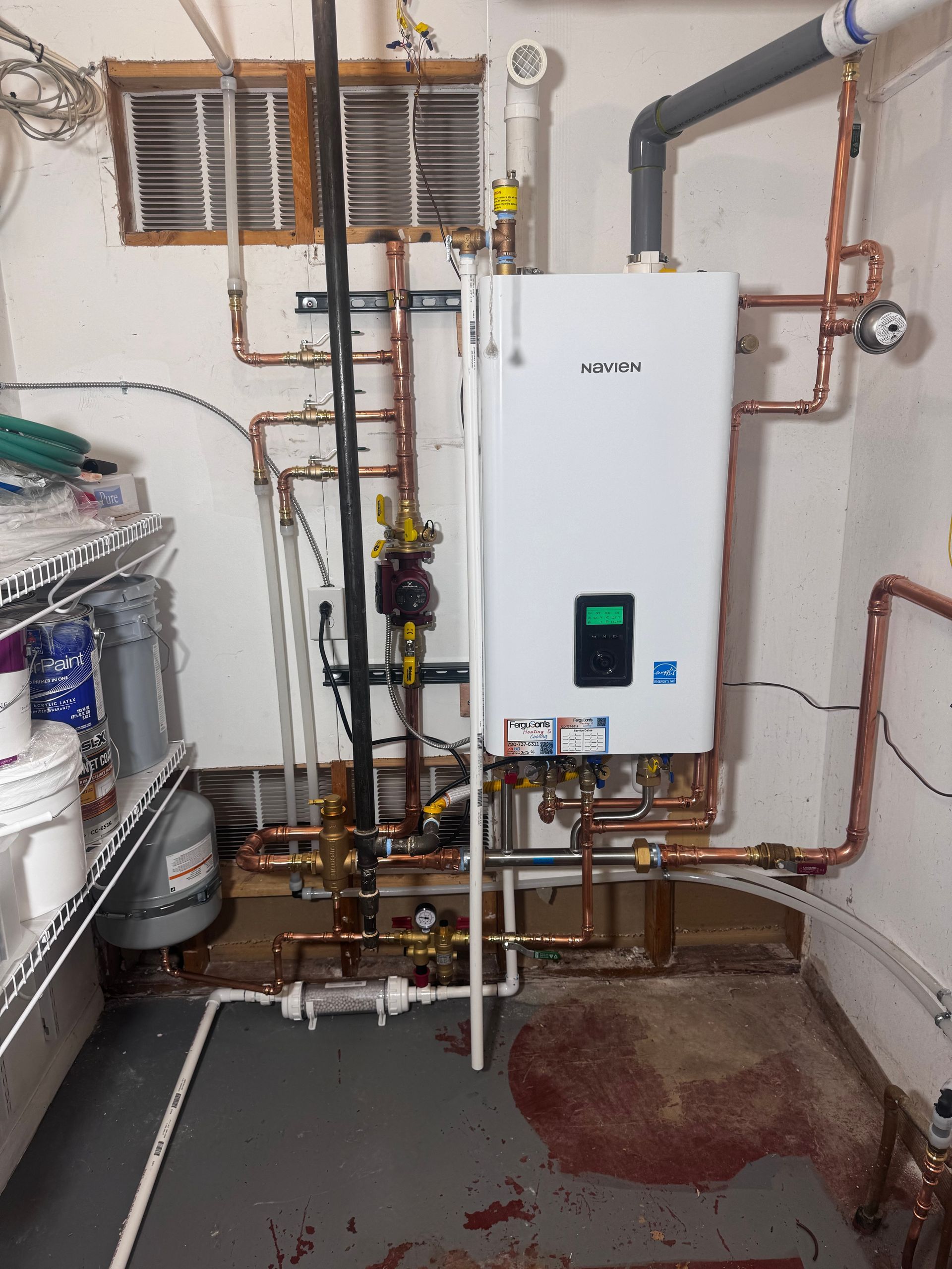
How to Extend the Life of Your Water Heater
Most water heaters are built to last 8–12 years for tank models, and up to 20 years for tankless units, but that lifespan depends heavily on how well the system is maintained. A little attention a few times a year can be the difference between getting a full decade of reliable hot water and facing an unexpected replacement.
Here's what our team at FerguSon's Heating & Cooling recommends every homeowner know.
1. Flush the Tank Annually
Sediment naturally settles at the bottom of a tank water heater over time, especially in areas with hard water. This buildup forces the unit to work harder to heat water and can eventually cause corrosion at the tank's base. Draining and flushing the tank once a year clears sediment out and helps the system run efficiently.
2. Check the Anode Rod Every 2–3 Years
The anode rod is a sacrificial metal rod inside the tank designed to attract corrosive elements in the water so the tank itself doesn't rust. Once it's mostly corroded away, the tank becomes vulnerable. Inspecting and replacing the anode rod every 2-3 years is one of the simplest ways to add years to your water heater's life.
3. Set the Right Temperature
Water heaters are often set higher than necessary right out of the box. Keeping the thermostat around 120°F is hot enough for household needs while reducing mineral buildup, limiting wear on internal components, and lowering energy costs — plus reducing scald risk.
4. Test the Pressure Relief Valve
The temperature and pressure (T&P) relief valve is a critical safety feature that releases pressure if it builds up too high inside the tank. Testing it once a year (by lifting the lever briefly and confirming water flows out, then shuts off) ensures it isn't stuck or corroded — which could otherwise lead to a dangerous pressure buildup.
5. Insulate the Tank and Pipes
Adding an insulation blanket to older tank units and insulating the first few feet of hot water pipes reduces heat loss. This means the system doesn't have to cycle on as often to maintain temperature, which reduces wear and lowers utility bills.
6. Watch for Warning Signs
Catching problems early can prevent a full failure. Signs to watch for include:
- Rusty or discolored water – may indicate internal tank corrosion
- Popping or rumbling noises – usually sediment buildup hardening at the bottom of the tank
- Water pooling near the unit – could mean a slow leak or a failing valve
- Inconsistent water temperature – often a sign the heating element or thermostat needs attention
- Rotten egg smell in hot water – can indicate bacteria in the tank, particularly in units that sit unused for periods
7. Schedule Annual Professional Maintenance
Beyond the basics homeowners can do themselves, an annual inspection by a licensed technician can catch issues before they become costly. A professional visit typically includes checking the anode rod, testing the T&P valve, flushing the tank, inspecting for corrosion or leaks, and verifying the unit's connections and venting are safe.
When Maintenance Isn't Enough
Even with great care, water heaters don't last forever. If your unit is approaching or past its expected lifespan, is requiring repairs more than once a year, or is showing signs of tank corrosion, it may be more cost-effective to replace it than keep repairing it — especially since a failing tank can lead to sudden leaks or flooding.
The Bottom Line
Routine care, flushing the tank, checking the anode rod, keeping temperatures reasonable, and watching for warning signs can add years of reliable service to your water heater and help you avoid an unexpected cold shower or water damage from a sudden failure.
Due for a water heater checkup, or noticing any of these warning signs? Ferguson's Heating and Cooling LLC is here to help. Call us today (720) 737-6311 to schedule a service.