Fall Furnace Prep in Colorado: 5 Things Every Front Range Homeowner Should Check Before Turning On the Heat
Here in Colorado, the transition from late summer to winter can happen overnight. One day you’re enjoying a mild 75-degree autumn afternoon in Littleton or Highlands Ranch, and by the next morning, an Arctic cold front rolls down the Front Range, dropping temperatures well below freezing.
Every October, our phones at FerguSon’s Heating & Cooling start ringing off the hook with the same urgent call: “We turned our thermostat to heat for the first time, and nothing happened, or it smells like something is burning!”
As a local, family-owned business, our goal isn't just to fix heating emergencies, it’s to help you avoid them altogether. Before you kick on your thermostat for the first big freeze, here are 5 essential checks every Colorado homeowner should make to ensure their furnace runs safely, efficiently, and reliably all winter long.
- Inspect and Replace Your Air Filter (The Mile-High Altitude Factor)
Most homeowners know they need to change their air filter, but few realize how much harder a furnace has to work at high elevation. Air along the Front Range and in the foothills is thinner. Your furnace blower motor has to move a higher volume of air to circulate heat effectively throughout your home.
If your air filter is clogged with summer dust, wildfire ash, or pet hair, airflow drops dramatically. This causes the internal temperature inside the heat exchanger to spike, tripping the high-limit safety switch and causing your furnace to short-cycle (turning on and off rapidly without heating the house).
- Our Recommendation: Swap your filter before firing up the furnace for the season. If you have pets or live near open dirt/construction, check it every 30 to 60 days throughout the winter.
- Pro Tip: Don't choke your system with an overly restrictive filter. High-MERV filters (MERV 13+) can severely restrict airflow on older residential blowers. A MERV 8 to 11 filter usually provides the best balance of air filtration and system airflow.
2. Clear Exterior Intake and Exhaust Vents (Watch Out for Front Range Debris)
Modern high-efficiency furnaces (90%+ AFUE) don't vent through a traditional brick chimney. Instead, they vent horizontally out the side of your home through white PVC pipes.
Over the spring and summer, these outdoor vent pipes are prime real estate for bird nests, wasp hives, fallen leaves, and mulch buildup. If either the intake or exhaust pipe is blocked even slightly, your furnace’s pressure switch will detect a vacuum imbalance and refuse to ignite as a safety precaution.
3. Distinguish Between "First-Burn Dust" and Real Carbon Monoxide Hazards
When you switch your furnace on for the first time in 6 to 8 months, it’s completely normal to notice a faint burning smell for the first 15 to 30 minutes. This is simply accumulated dust burning off the hot heat exchanger surface. Open a window slightly, let it dissipate, and it should disappear quickly.
However, you should NEVER ignore:
- Soot or scorch marks around the furnace burner door or flue connection.
- A rattling or banging noise when the burners ignite (which can indicate delayed ignition or cracked components).
- Frequent tripping of your carbon monoxide (CO) alarms.
In older gas furnaces, microscopic cracks can develop in the metal heat exchanger after years of heating and cooling expansion cycles. A cracked heat exchanger can leak deadly, odorless carbon monoxide gas into your supply air ductwork. Testing your CO detectors on every floor of your home in October is a non-negotiable safety check.
4. Check Your Blower Door Panel and Thermostat Settings
You’d be surprised how many "broken furnace" calls turn out to be simple panel misalignments or thermostat glitches!
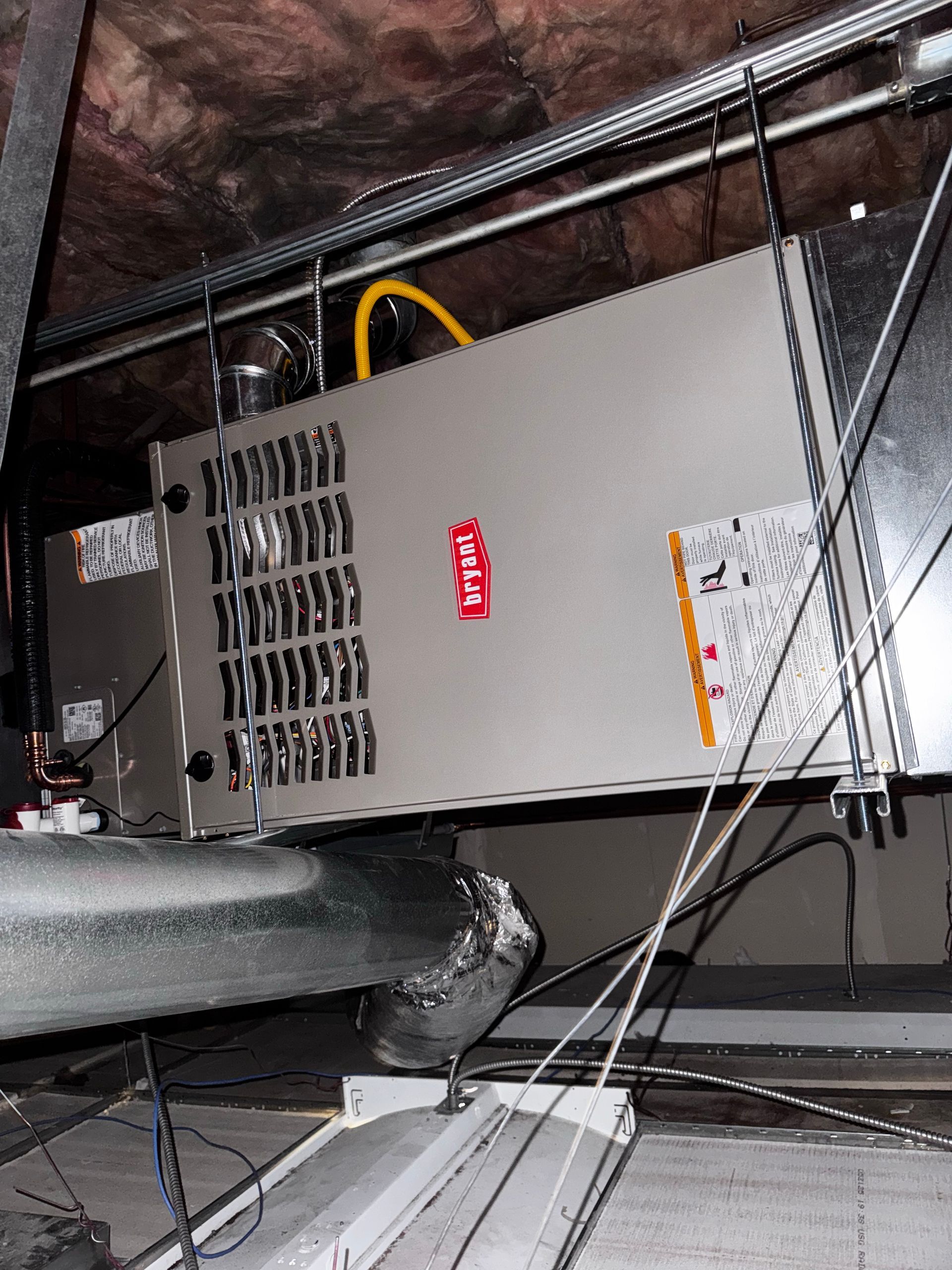
- The Safety Switch Test: Every furnace features a door safety switch behind the main access panel. If you changed your filter recently and didn't push the metal panel completely flush, the safety switch won't engage, leaving the entire system completely dead.
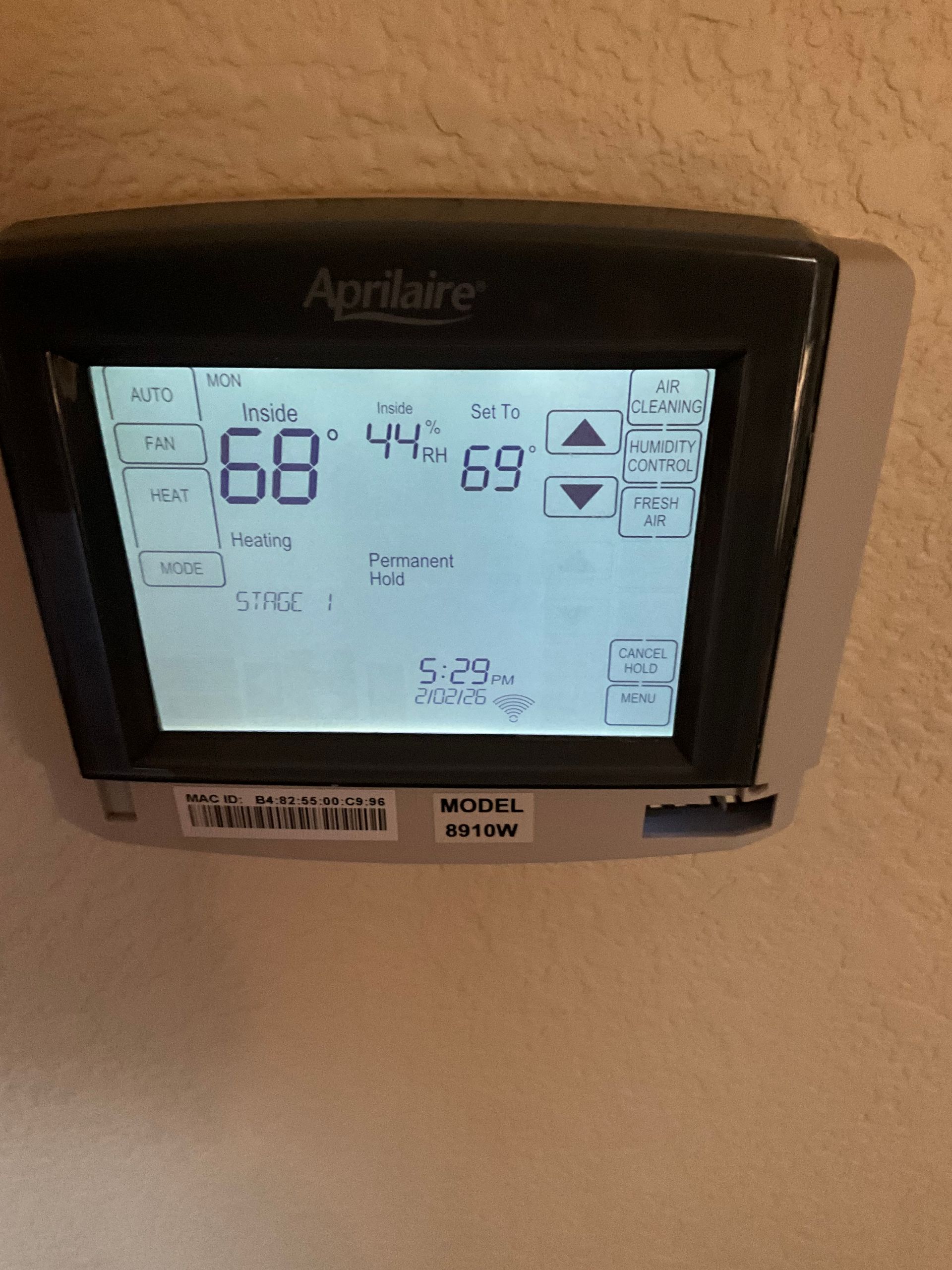
- Thermostat Call-for-Heat: Ensure your thermostat is set strictly to "HEAT" (not "AUTO" or "COOL") and set the target temperature at least 3 to 5 degrees above the current room temperature. If you have a smart thermostat, check for low-battery warnings or seasonal schedule overlaps.
5. Inspect Your Whole-Home Humidifier Pad
Colorado winter air is notoriously dry. Running a furnace all winter drops indoor relative humidity levels down to 10–15%, leading to dry skin, static shock, split wood trim, and increased susceptibility to winter colds.
If your HVAC setup includes a whole-home bypass or power humidifier attached to your ductwork:
- Turn the water supply valve back ON (many homeowners shut it off for summer).
- Open the duct damper from "SUMMER" to "WINTER" position.
- Replace the internal humidifier water panel (evaporator pad). Hard Front Range tap water causes mineral scale to crust over these pads within a single season, reducing moisture output and harboring bacteria.
Why a Professional 25-Point Inspection Beats DIY Troubleshooting
While checking your filter and clearing outdoor vents are great DIY tasks, gas appliances operate using high voltage electricity, natural gas, and precise combustion dynamics.
At FerguSon’s Heating & Cooling, our comprehensive annual heating tune-up goes far beyond a surface inspection. We perform a full 25-point safety check that includes:
- Testing electrical contactors, capacitor ratings, and high-voltage amp draws on blower motors.
- Cleaning the flame sensor and testing gas valve manifold pressures.
- Inspecting the heat exchanger for stress fractures, rust, or flame rollout hazards.
- Verifying proper venting and draft airflow to prevent carbon monoxide buildup.
Catching a worn-out igniter or failing pressure switch during a routine October maintenance visit costs a fraction of an emergency repair call in the middle of a January snowstorm.
Is Your Furnace Ready for Front Range Winter?
Don't wait for the first sub-zero arctic blast to find out your furnace isn't working! Whether you need a seasonal tune-up, an honest diagnostic, or an expert second opinion on an aging heating system, Cody Ferguson and our team are here to help.
Call FerguSon’s Heating & Cooling today at (720) 737-6311 to schedule your fall maintenance visit!